
Choosing the right hunting tools is more than just picking something sharp—it’s about selecting gear that matches your hunting style, environment, and purpose. With so many types of hunting knife and axe available today, understanding blade designs, materials, and practical uses can make a huge difference in performance, safety, and long-term value.
Whether you’re a seasoned hunter, outdoor survival enthusiast, or a retailer sourcing reliable stock, this guide will help you make an informed decision.
Every hunting situation demands a different type of tool. Some blades are designed for precision tasks, while others are built for heavy-duty impact.
Common uses include:
Knowing hunting knife and axe uses helps you avoid overpaying for tools you don’t need—or worse, choosing the wrong one for the job.
Fixed blades are known for strength and durability. Since the blade doesn’t fold, it offers better control and reliability for demanding tasks.
Best for:
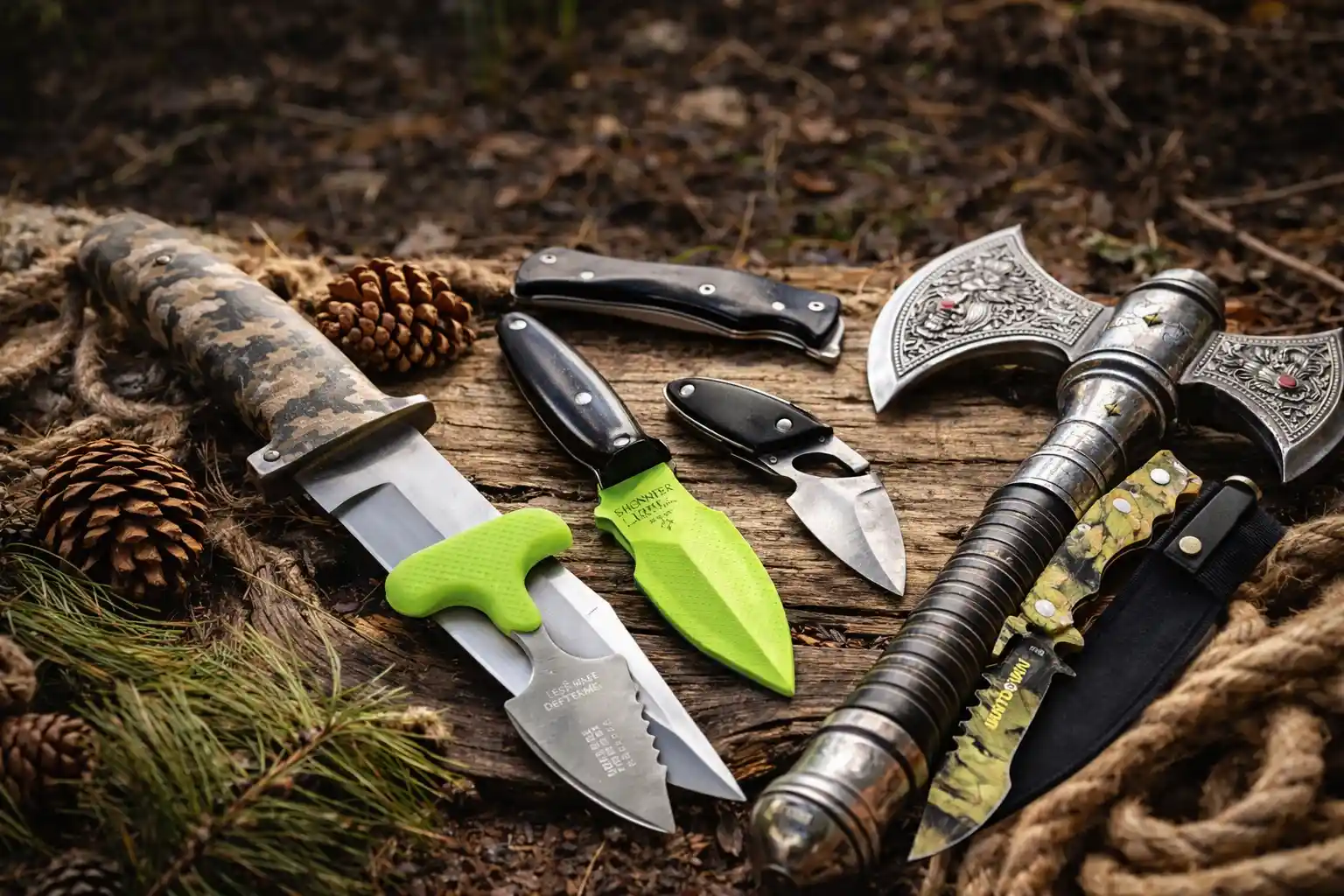
A great example is the 10″ Stainless Steel Hunting Knife Camo Handle, designed for balance, grip, and corrosion resistance. Its sturdy construction makes it ideal for hunters who need confidence in every cut.
Compact and easy to carry, folding knives are practical for light-duty tasks. While they may not match fixed blades in strength, they shine in portability.
Best for:
Push knives offer a unique grip style that enhances control and close-range usability. Their compact size and ergonomic design make them popular for both tactical and utility purposes.
The 5″ Stainless Steel Lime Green Push Knife is a standout choice due to its full-tang construction and high-visibility handle.
When knives fall short, axes take over. A hunting axe is essential for chopping wood, splitting logs, and clearing tough terrain.
The 19″ Cross Shape Indian Axe Pipe is built for impact and endurance, making it suitable for outdoor professionals and serious hunters.
Many experienced hunters prefer carrying both a knife and an axe. This combination covers a wider range of tasks without overloading one tool.
Knife handles:
Axe handles:
This balance is why knife and batons or axe pairings are common in survival kits and professional hunting gear.
Before you buy, consider these essential factors:
Stainless steel is popular for its rust resistance and low maintenance—perfect for unpredictable outdoor conditions.
Textured, ergonomic handles reduce slippage, especially in wet or cold environments.
Larger tools offer power but reduce portability. Smaller blades improve control and ease of carry.
Always match the blade type to your primary activity—hunting, camping, survival, or resale.
If you’re sourcing inventory, bulk hunting knife and axe purchasing offers major advantages:
Explore a complete range of options here:
Retailers looking to buy hunting knife and axe products often prioritize durability, packaging appeal, and consistent quality—all essential for repeat sales.
Outdoor tools have strong demand in regions with active hunting and camping culture. Searches for hunting knife and axe Canada and hunting knife and axe Surrey BC continue to rise due to seasonal hunting, outdoor recreation, and preparedness trends.
Stocking regionally relevant designs and sizes can significantly improve conversions for both online and physical stores.
Cheap tools often fail when you need them most. A well-built hunting knife or axe:
Investing in quality tools isn’t just smarter—it’s safer.
Understanding the right types of hunting knife and axe ensures better performance, safety, and long-term value—whether you’re using them in the field or selling them to customers. The right blade isn’t just a tool; it’s an investment in efficiency and reliability.
WhatsApp us